

The Foundation: Why Starting Strength Should Be Your First Read
Mastering Movement Before Chasing Complexity

Look, I get it. You just finished your certification, you’re fired up about coaching, and you want to write programs that look impressive. You want to show people you know your stuff. I was exactly the same way.
I’d write these elaborate training blocks with every exercise variation I’d learned. My spreadsheets looked professional. My periodization made sense on paper. And my athletes got stronger, but honestly? They would have gotten stronger doing almost anything because they were beginners.
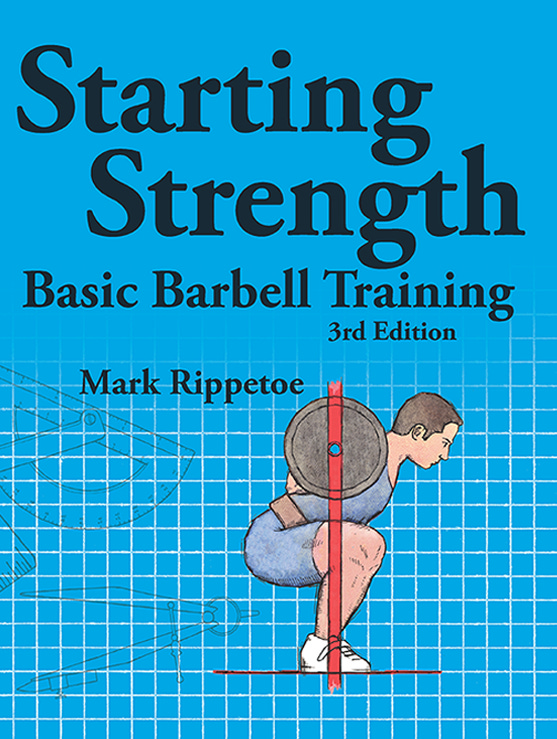
Then someone recommended I actually sit down and study Mark Rippetoe’s Starting Strength: Basic Barbell Training. And I mean really study it, not just skim it.
That book changed everything about how I approached coaching.
What Actually Matters
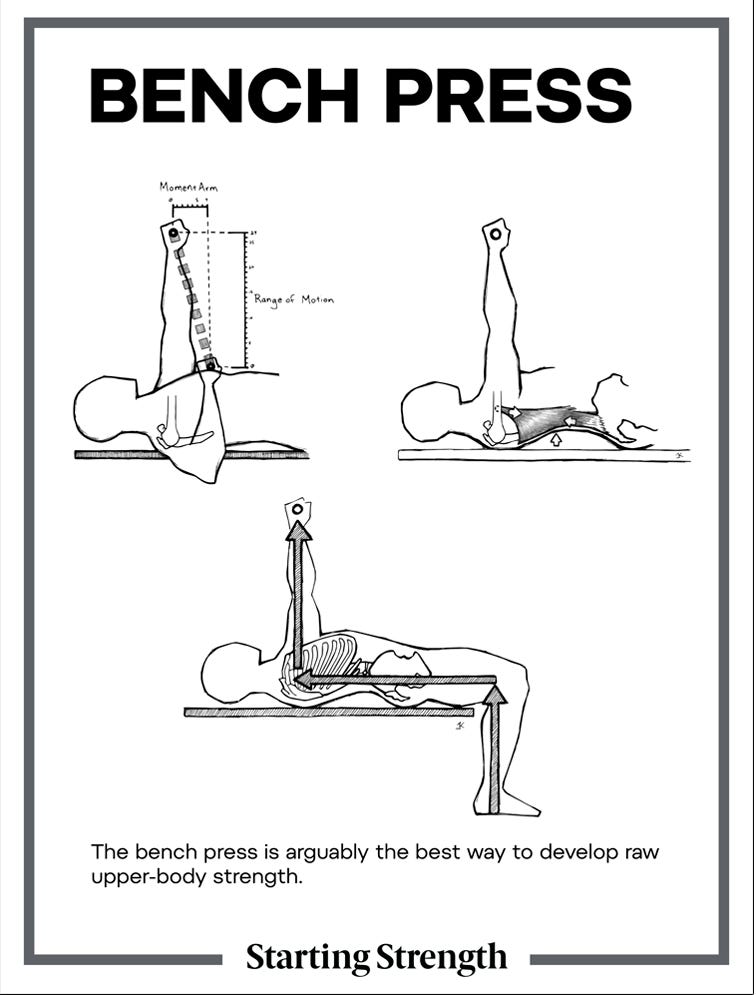
Here’s the thing about Starting Strength: it’s built around four lifts. The Squat, Bench Press, Deadlift, and Overhead Press. That’s it.
When I first read this, I remember thinking it was too simple. I wanted more complexity because I thought complexity meant I was a better coach.
But Rippetoe’s philosophy is straightforward: master the basics before you start getting fancy with your programming. The book made me ask myself a hard question: Can I actually articulate why I’m programming each exercise, or am I just including it because it looks good?
Turns out, most of my elaborate programming couldn’t pass that test. I was programming to look smart, not to be effective. As Flanick and Rippetoe explain in their article on coaching, this is a common trap: too many coaches miss “the forest for the trees” by programming complex movements when “what you need is to squat and deadlift correctly” (Flanick and Rippetoe).
Learning to See What’s Happening
Here’s where this book is different from most training resources. It’s not really about programs at all. It’s about learning how to coach movement.
Each chapter breaks down a lift in detail. Not just what it should look like, but how to identify what’s going wrong and how to communicate the fix that will actually work.
Take the Squat chapter. It walks you through why bar position matters mechanically. Why hip drive is the primary movement pattern. Where you should stand as a coach, usually at that 45° angle where you can actually see the relationship between the bar, the hips, and the knees. What you should be looking for in real-time that tells you what’s happening.

The book talks about how novice lifters need an experienced eye providing feedback on position and form that they cannot feel and see themselves. And that was my problem early on. I didn’t have an experienced eye yet. This book taught me how to develop one.
Before I really studied this stuff, I could see when something looked wrong. But I couldn’t tell you what specifically was wrong or why. So I’d throw generic cues at athletes and when those didn’t work, I had nothing else.
Starting Strength gave me a framework for understanding movement at a deeper level. This is what separates real coaching from mere supervision. Flanick and Rippetoe argue that “a true physical coach is a teacher who uses a model as the basis for instruction of a movement.” Without that model—without objective criteria—you simply cannot detect errors effectively. As they put it: “How do you expect to detect errors in movement if you have no objective criteria against which to compare the performance you’re observing? The simple answer is that you can’t” (Flanick and Rippetoe).
I started seeing specific breakdowns, understanding why they were happening, and communicating precise corrections.
That’s the difference between supervising workouts and actually coaching.
Communication Under the Bar
Rippetoe defines coaching as being able to tell someone the thing they need to hear to get them to do with their body the thing they are trying to do.
That sounds obvious until you’re standing there and your cue isn’t working and you don’t know what else to say.
The book teaches you communication through logical teaching progressions. Every lift gets broken into a step-by-step sequence. You learn what to address first, what comes second, what comes third. So you’re not just throwing ten cues at someone all at once.
This approach aligns with what effective coaches understand about their craft. Flanick and Rippetoe emphasize that “the ability to get another person to understand and correctly perform a loaded barbell movement is dependent on your ability to communicate.” Communication happens through instruction when teaching the movement initially, and through cues as the movement pattern is perfected (Flanick and Rippetoe).
The diagrams are detailed and show you what correct movement looks like from multiple angles. After you’ve studied these, you start spotting deviations immediately. More importantly, you understand which deviations actually matter and which ones are just individual variation.
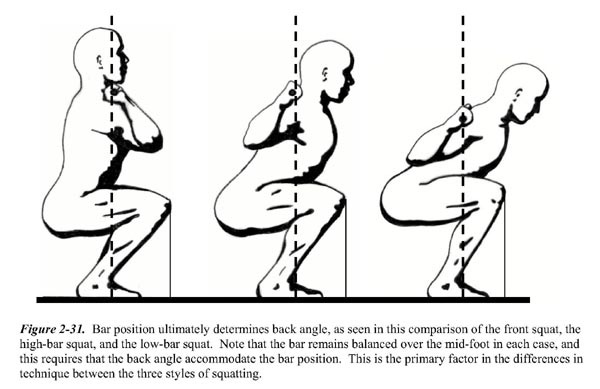
There are also sections on common faults and how to fix them. So instead of being surprised when something goes wrong, you recognize it immediately because you’ve already seen the pattern and the solution.
Simple Programming, Deep Learning
The programming in Starting Strength is the Novice Linear Progression: train three times a week, add weight to the bar every session, ride it as long as you can.
I dismissed this as too simple when I first saw it. I thought effective programming needed to be more complex.
But here’s what I learned: simple doesn’t mean easy. And when you’re learning to coach, simple progression beats clever programming every single time.
The beauty of the NLP is that it forces you to focus on what matters: teaching good technique under progressively heavier loads. You’re not distracted trying to be clever with your programming. You’re learning to coach movement, observe adaptation, and make decisions in real-time.
This simplicity is actually a mark of expertise, not ignorance. As Flanick and Rippetoe observe, “experienced coaches find ways to make things simpler rather than more complex for the trainee, and this talent is the hallmark of a great coach’s professional development” (Flanick and Rippetoe). Human movement under load is inherently complicated, but an effective coach learns to spare the novice that complexity while still understanding all the subtle components beneath the surface.
You learn how to tell when someone’s recovered and ready for more weight. How to tell the difference between a bad day and an actual plateau. How to read what’s happening and adjust.
These skills matter more than knowing a bunch of fancy periodization schemes. They’re foundational to everything else you’ll do as a coach.
And here’s something I didn’t fully appreciate at the time: the NLP taught me that assessment should be a tool, not the goal. By keeping things simple and focused, I learned to pay attention to movement quality, consistent effort, and real adaptation over time. Not just chasing numbers.
Your Starting Point
Let me be clear: Starting Strength isn’t everything you need to know, but it was the foundation that made everything else make sense.
The book is deliberately focused on foundational barbell training. That’s its strength. But eventually you’ll need to learn about sport-specific programming, Olympic lifting, accessory work, energy system development, all of it.
What this book does is give you the foundation to understand all that future learning. You can’t intelligently program accessories if you don’t understand the primary movements first. You can’t evaluate advanced periodization if you don’t understand basic progressive overload.
The principles you learn here (stress, adaptation, recovery, systematic progression) apply to everything. The coaching eye you develop watching squats? That serves you forever. The communication skills you build teaching deadlifts? They transfer to teaching any movement.
But you need the proper foundation first. Flanick and Rippetoe are clear about this: “If you’re going to be a barbell coach, experience under the bar is required. You cannot effectively understand and coach barbell training for other human beings if you do not personally have thousands of hours under the bar” (Flanick and Rippetoe). You need to experience the same stresses, recovery, and adaptations you’ll be guiding others through.
Start here. Master this. Then move on.
Building Your Framework
Success in coaching isn’t about knowing the most exercises or having the most sophisticated-looking program. It’s about developing real competence in the fundamentals.
Understanding why you’re doing what you’re doing. Creating an environment where your athletes can actually progress consistently.
Starting Strength gave me that framework. Not just the exercises or the program template, but a way of thinking about movement, teaching, and progress that shaped everything after.
It made me ask better questions: What does this movement actually accomplish? Can I teach this effectively? Does this serve my athlete’s development, or does it just make me look knowledgeable?
I still use those questions today. And I’ve learned that the best coaching relationships evolve over time. As Flanick and Rippetoe describe, “as the client moves from novice to intermediate to advanced lifter, the client becomes less dependent on the coach, and the coach’s role becomes that of Consultant to the athlete” (Flanick and Rippetoe). The goal isn’t to create dependency—it’s to develop self-sufficient lifters who understand their own training.
What I’d Recommend
If you’re building your approach to coaching right now, start with this book. Not because it has everything, but because it has the first things you need to understand.
Are you prepared to really study this material? Be honest with yourself. This isn’t a book you read once and put on the shelf. It’s a reference you come back to as you develop your coaching eye and refine your teaching progressions.
Do you actually want to master the fundamentals before moving on to more advanced programming? If you’re the type who jumps from program to program, or who wants to write complex periodization before you can teach a perfect squat, you’re overestimating where you are in your development.
Get the book. Actually study the teaching progressions. Practice the coaching positions. Learn to see movement the way it teaches you to see movement. Master these fundamentals before you start chasing complexity.
And remember what Flanick and Rippetoe emphasize about the coaching journey: “The best coaches are students forever. Always questioning, always seeking answers – constantly questioning ‘the way it’s always been done,’ trying to find and implement new and better ways of doing things” (Flanick and Rippetoe). Good coaches never stop learning.
The coach who understands the basics deeply is always going to outperform the one who knows a thousand exercises superficially.
This is where that depth starts.
Coach’s Challenge: If you already own Starting Strength, grab it and re-read one lift chapter like you’re learning to coach it for the first time. Focus on the teaching progression and the biomechanics. If you don’t own it, that’s your assignment.
What foundational resource shaped your early coaching? Let me know in the comments.
Until next time,

Works Cited
Flanick, Dan, and Mark Rippetoe. “What Is a ‘Coach’?” Starting Strength, 11 Jan. 2017.
Rippetoe, Mark. Starting Strength: Basic Barbell Training. 3rd ed., The Aasgaard Company, 2011.