

Tradition vs. Effectiveness
What Coaching, Holiday Rituals, and Aspirin All Teach Us About Dosage

As I’ve just come through another holiday season with my family, I found myself thinking less about the gifts or the food and more about the traditions themselves and why we cling to them so tightly.
Every year, I watch the same cycle repeat. Stress rises. Frustration creeps in. Tempers flare. All in the name of trying to make the holidays perfect. We rush from obligation to obligation, determined to preserve traditions that, if we’re honest, many people don’t actually enjoy anymore.

We cook recipes no one really likes because “that’s what we’ve always had for Christmas dinner.” We stick to gift-giving rituals that made sense when our kids were five, but feel awkward now that they’re teenagers or young adults. We pull out the special plates and dishes that only see daylight once a year, even though paper plates would make everyone’s life easier.
At some point during the chaos, I caught myself wondering: Would the holidays actually be less meaningful if we let some of these traditions go? Or are we confusing tradition with purpose?
That question followed me straight back into the weight room.
Because the more I reflected, the more I realized how much coaching, my coaching included, can start to look exactly like those holiday traditions. Programming elements that exist not because they’re effective, but because they’re familiar. Practice structures that feel “right” simply because they’ve always been there. Volume, drills, and routines we defend out of habit rather than intention.
We do them because they’re tradition.
Not because they’re optimal.
And just like holiday traditions, when you stop and examine them closely, you begin to see that some of them add real value… while others quietly create stress, fatigue, and frustration without delivering much in return.
That realization brings me to the main point of this article.
One of the most damaging traditions in coaching isn’t a specific drill, lift, or conditioning test, it’s the belief that more is always better. That piling on work is proof of commitment. That exhaustion is evidence of effectiveness.
It’s here that tradition collides head-on with physiology.
And it’s why understanding dosage, not just intent, may be one of the most important skills a modern coach can develop.
From Tradition to Intention

I’m a geriatric millennial, born in that narrow window between analog childhoods and digital dominance. I remember life before the internet, but I’m also fluent enough in modern technology to avoid asking my kids how to use my phone. This puts me in a unique position as a coach: I have one foot firmly planted in the “old school” world of grit, hard work, and traditional methods, while the other is stepping into new paradigms backed by science, data, and evolving philosophy.
At times it’s an uncomfortable place to stand, straddling two worlds. But it’s also where, in my opinion, the most important work happens.
Being caught between generations has forced me to constantly question my methods. In a way that sharpens and refines. I can’t simply accept “this is how we’ve always done it” because I’ve seen too many examples where tradition masked ineffectiveness. But I also can’t dismiss decades of proven results just because something new and shiny comes along.
In my previous article, The Uncomfortable Truth: Why Questioning Everything Fuels Your Coaching Growth, I wrote about how real coaching mastery comes from asking better questions, not having all the answers. Today, I want to expand on that idea by addressing one of the most critical, yet often overlooked, principles in coaching: dosage.
If One Aspirin Isn’t Enough, Fifty Is Too Many

I often use this analogy with my athletes: If one aspirin isn’t enough to cure your headache, taking fifty won’t make it better, it’ll kill you.
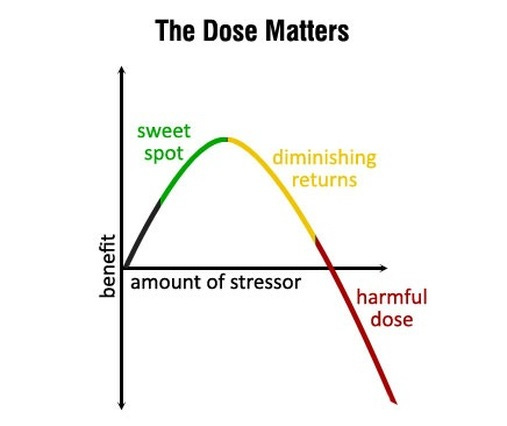
It’s a simple concept rooted in toxicology, dating back 500 years to Paracelsus, who said, “Everything is a poison, nothing is a poison, it all depends on the dosage.” Two hundred years later, Hugo Schulz refined this into what we now call hormesis, the principle that small doses of a stressor stimulate positive adaptation, moderate doses maintain homeostasis, and large doses cause harm.

Yet coaches routinely violate this principle. We pile on volume. We grind athletes into the ground. We confuse exhaustion with effectiveness. We operate under the assumption that more work equals better results, when in reality, we’re often poisoning the very thing we’re trying to develop.
Speed. Skill. Power. Recovery. Each of these qualities exists within a finite window of optimal development. Push too little, and you leave gains on the table. Push too much, and you actively degrade performance.
The challenge for modern coaches, especially those of us bridging old and new paradigms, is learning to recognize the difference.
The Old School Trap: Confusing Sacrifice with Strategy
Traditional coaching culture glorifies suffering. If practice isn’t brutal, players must be soft. If they’re not exhausted, they didn’t work hard enough. If they’re not sore the next day, the session was a waste.
I get it. I grew up in this system. I played for coaches who believed that mental toughness was forged in the fire of relentless conditioning. That discipline meant running until you puked. That the only way to earn respect was to sacrifice your body on the altar of “the grind.”
And you know what? Some of those coaches were phenomenal. They won championships. They built programs. They shaped young men and women into resilient competitors.
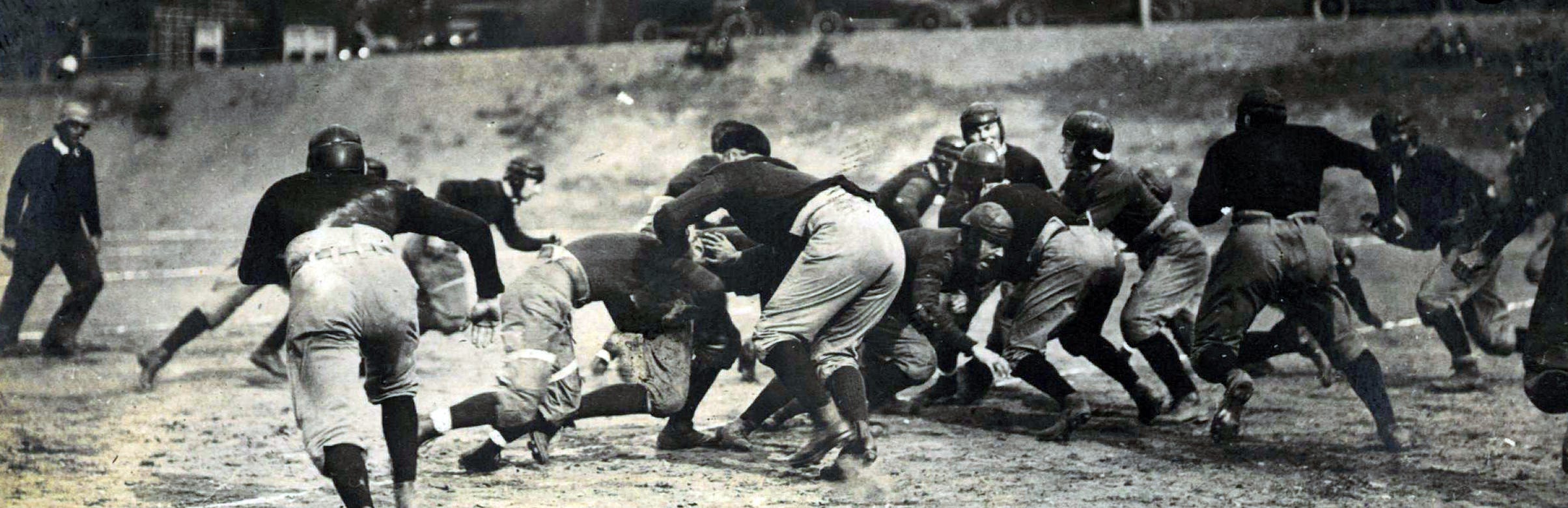
But here’s the uncomfortable truth: they may have won in spite of their methods, not because of them.
They had better talent. Better culture. Better game-day execution. Their players succeeded because they were gifted athletes who survived the training, not because the training was optimal.
In Cal Dietz and Jonathon Janz’s piece, Speed and Skill Optimization: A New Practice Paradigm, they make a critical observation: “A coach who seeks to exhaust his athletes each and every practice is a coach lacking all understanding of human physiology and of the nature of sport itself.”
This isn’t soft. This isn’t coddling. This is science.
High-level coaching requires understanding that the human body has finite parameters. It responds to specific forms and quantities of stress. If you exceed those thresholds, you don’t get stronger, faster, or more skilled, you get slower, weaker, and injured.
And yet, many coaches continue operating in the same framework that’s been around for 40+ years. Stretching, agility ladders, stations, team periods, conditioning to finish. Rinse and repeat. Monday through Thursday. Every week. Every season. Forever.
Why? Because that’s how it’s always been done.
The Modern Paradigm: Speed Is Fragile, Practice Accordingly
One of the most radical ideas I’ve encountered comes from the world of sprint coaching, where the mantra is: Sprint as fast as possible, as often as possible, while staying as fresh as possible.
Notice what’s missing? Volume. Grinding. Exhaustion.
Speed is a skill. Skills require precision. Precision requires a fresh nervous system. A fresh nervous system requires recovery.

Tony Holler, a popular and influential voice in modern speed development, makes a compelling case in his writings on football practice reform. He argues that most high school football teams are slower than they should be not because they lack talent, but because their coaches are actively making them slow through excessive volume and insufficient recovery.
Think about that. The very thing coaches claim they’re building (speed, explosiveness, power) is being systematically destroyed by their training methods.
Holler references the “hormesis graph,” where optimal performance exists in a narrow band. Too little stimulus, and you don’t adapt. Too much, and you breakdown. The goal isn’t to maximize training volume. It’s to find the minimum effective dose that produces maximum results.
This is where the aspirin analogy becomes critical. One aspirin cures the headache. Two might work a bit faster. But fifty kills you. The same logic applies to training:
One quality speed session builds speed.
Two might be manageable with proper recovery.
Seven in a row leaves your athletes slow, sore, and vulnerable to injury.
As Holler writes: “Speed is a poison, subject to the terms laid out by Paracelsus and Schulz.”
The dose makes the poison.
Don’t Forget the Past, But Don’t Stay There Either
Here’s where my geriatric millennial perspective becomes useful. I’m not suggesting we throw out everything that worked in the past. Old-school coaches got a lot right: discipline, accountability, attention to fundamentals, mental toughness.
But the world has changed. Athletes are different. Information is abundant. Research is accessible. We now understand physiology, neurology, and biomechanics at a level previous generations couldn’t have imagined.
To cling to outdated methods simply because “that’s how Coach did it” isn’t loyalty. It’s negligence.
The best coaches I know, regardless of age or generation, are constantly evolving. They study. They experiment. They admit when something isn’t working. They adapt ideas from other sports, other coaches, other disciplines. They understand that adaptation is survival.
In Speed and Skill Optimization, Dietz and Janz write: “In our experience, many coaches generally understand strategy and tactics but almost entirely lack knowledge of skill acquisition and performance.”
This is the gap. This is where old-school coaching falls short.
We can yell. We can motivate. We can design brilliant schemes. But if we don’t understand how athletes learn, when they perform best, and what dosage of training produces optimal results, we’re just guessing.
And our athletes deserve better than guesswork.
The Aspirin Principle in Practice
So what does this look like practically? Here’s my thoughts…
1. Prioritize Quality Over Quantity
If you’re a football coach, ask yourself: Would I rather have my athletes run 100 reps at 80% intensity, or 20 reps at 100%? The research is clear. Speed and power are developed at max intensity, not through grinding volume.
2. Respect Recovery
Rest isn’t laziness. It’s strategic. If you’re training speed on Tuesday, your athletes need recovery on Wednesday. You can’t go hard every day and expect peak performance on game day.
3. Simplify Your System
Complexity doesn’t equal sophistication. The best programs are simple, repeatable, and executed with precision. If your playbook requires a cheat sheet, it’s too complicated.
4. Monitor, Adjust, Repeat
Track performance metrics. Are your athletes getting faster? Stronger? Healthier? If not, your dosage is wrong. Adjust accordingly.
5. Challenge the Process
Just because something has “always been done this way” doesn’t mean it’s optimal. Question everything. Test assumptions. Be willing to change.
Final Thought: The Best Coaches Evolve
As the holidays wrap up each year, most of us eventually realize something important: the moments that mattered weren’t the perfectly executed traditions. They weren’t the exact recipes, the rigid schedules, or the stress we carried trying to make everything “just right.”
What mattered were the people. The connection. The intention behind the gathering.
Some traditions enhanced that. Others quietly worked against it.
Coaching is no different.
Tradition is the dead hand of human progress.
— Kelly Miller
Tradition isn’t the enemy. In fact, many traditions exist for good reason. They once served a purpose. They solved a problem. They produced results. But when we stop examining why we do something and focus only on the fact that we’ve always done it, we risk turning a once-useful tradition into a source of unnecessary stress, fatigue, and harm.
The best coaches don’t abandon tradition wholesale. They audit it.
They keep what adds value. They modify what needs adjusting. And they have the courage to let go of what no longer serves their athletes.
That’s what the Aspirin Principle really represents.
It’s not about doing less for the sake of being different. It’s about doing enough. The right amount, at the right time, for the right reason. It’s about understanding that effectiveness lives in a narrow window, and that exceeding it doesn’t make us tougher or more committed, it just makes us less effective.
Just like the holidays, coaching becomes better when intention replaces obligation.
When purpose replaces habit.
When dosage replaces dogma.
So as you look ahead to your next season, your next training cycle, or your next practice plan, ask yourself a simple question:
Am I doing this because it truly serves my athletes or because it’s tradition?
Because one aspirin might not solve the problem.
But fifty never will.
Until next time,
Keep questioning. Keep evolving. Keep coaching.

Works Cited
Dietz, Cal, and Jonathon Janz. “Coaches Corner: Speed and Skill Optimization - A New Practice Paradigm.” Triphasic Training methodology materials.
Holler, Tony. “New Ideas for Old School Football Coaches.” Track Football Consortium resources. Available at: tony.holler@yahoo.com and ITCCCA.com, FreelapUSA.com, SimpliFaster.com.
Holler, Tony. “Football Dosage and Approach ⇒ FAQ.” Track Football Consortium resources. Available at: tony.holler@yahoo.com and ITCCCA.com, FreelapUSA.com, SimpliFaster.com.
Paracelsus. “Dose-Response Relationship.” Foundation of toxicology principle, 16th century.
Schulz, Hugo. “Hormesis Theory.” Toxicological research on biphasic dose response, 19th century.
“The Uncomfortable Truth: Why Questioning Everything Fuels Your Coaching Growth.” The Barbell Ethos, Substack, January 2025. https://thebarbellethos.substack.com/p/the-uncomfortable-truth-why-questioning